
Investigating biodiversity around Mowi fish farms
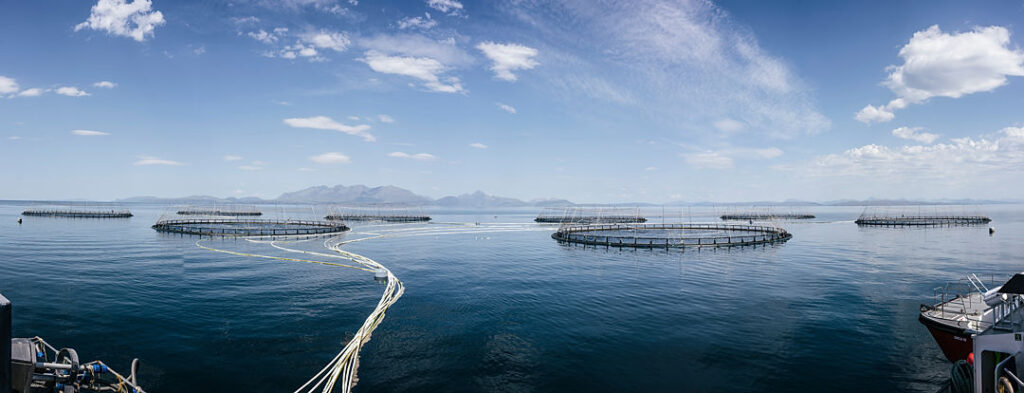
Mowi Scotland has been going beyond its regulatory compliance obligations and investigating the wider biodiversity in the marine environment surrounding fish farm sites. Advancing our understanding of the marine environment our fish farms operate within is important so we can ensure we are able to grow our salmon in a healthy environment on the west coast of Scotland for generations to come.
Environmental DNA (eDNA), which is genetic material left behind by organisms in the environment, has been used to determine the presence of marine organisms that coexist close to our fish farms. A water sampler, which pumps seawater over the course of 25 hours, has been deployed off eight of our fish farm sites (shown below).
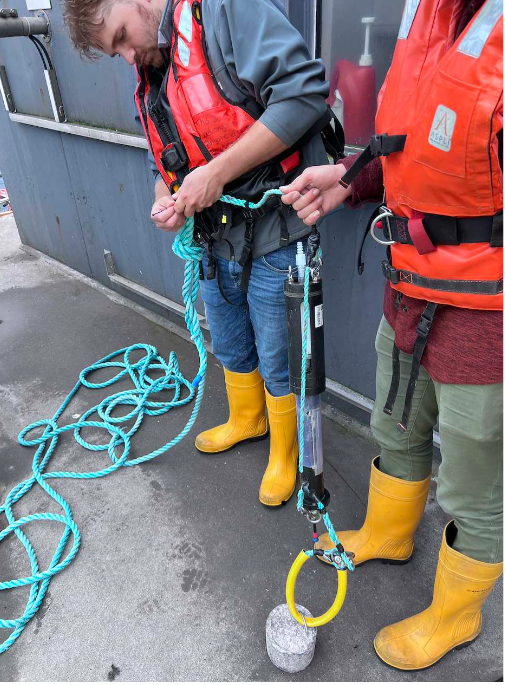
The eDNA is collected on a filter contained within the water sampler, which is then analysed by Applied Genomics using multi-DNA markers to detect the genetic diversity of our sample. Focusing on the results from our Hellisay site, within one deployment we found 145 species within proximity to our farming operations including:
- Numerous commercially important fish species including haddock, whiting, pollock, hake, herring
- Diverse marine assemblages including Atlantic bluefin tuna, spurdogs, common dolphin, fin whale, razor clams, and a diverse phytoplankton community
- The presence of the harbour seal, a qualifying feature of the Sound of Barra Special Area of Conservation (SAC)
- A strong land-sea ecological connectivity demonstrated by the presence of the Eurasia otter and seabirds such as guillemots, oystercatchers and cormorants
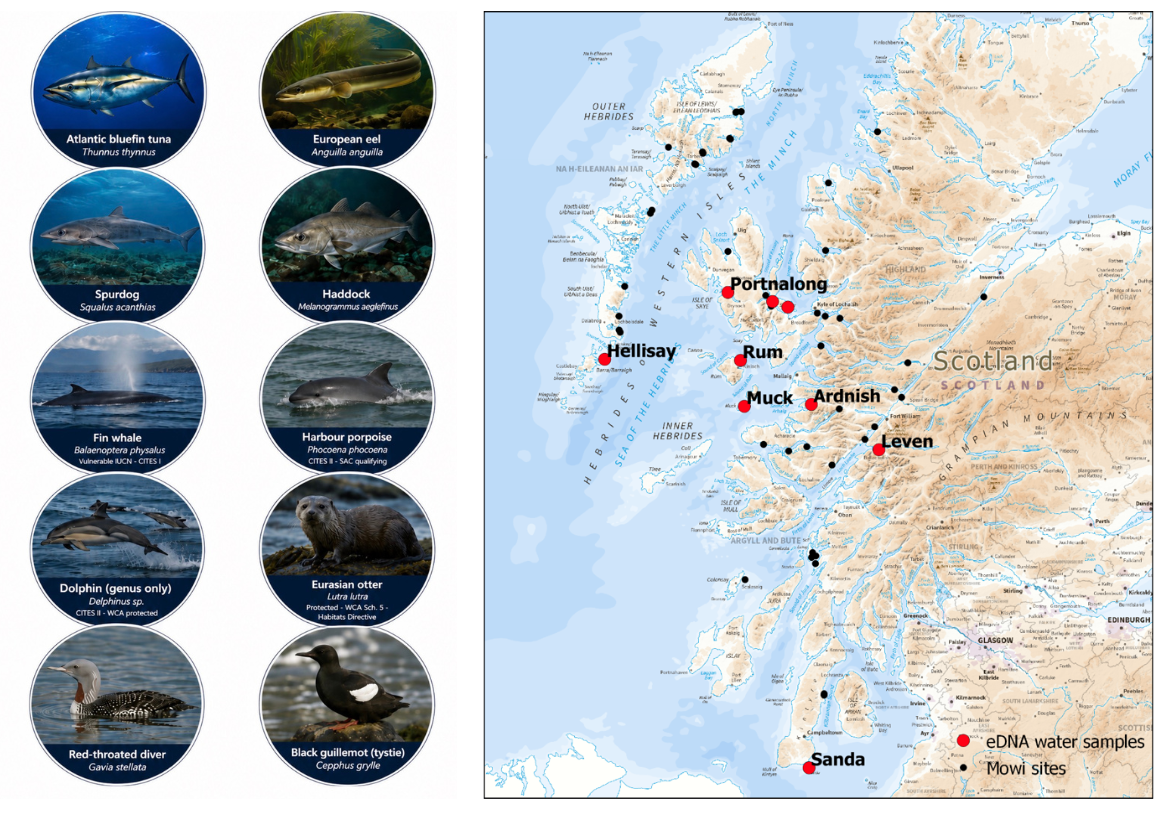
Our next steps are to collect a time series of data by deploying the water sampler at Mowi’s Rum fish farm over the course of six months. With this time series we hope to capture seasonality, cryptic and transient species, and build upon our knowledge of the wider biodiversity that our fish farms operate within.
