“We strive to ensure that we always use best-in-class equipment for all sites, and that we continuously refine our operational procedures, main equipment types and support technologies according to new knowledge, improved analytical tools and rapid technological advancement. This is what Mowi has always done and will continue to do, and it shows in our performance when it comes to, for example, incidents and escapes.”
Safeguarding both our fish and equipment
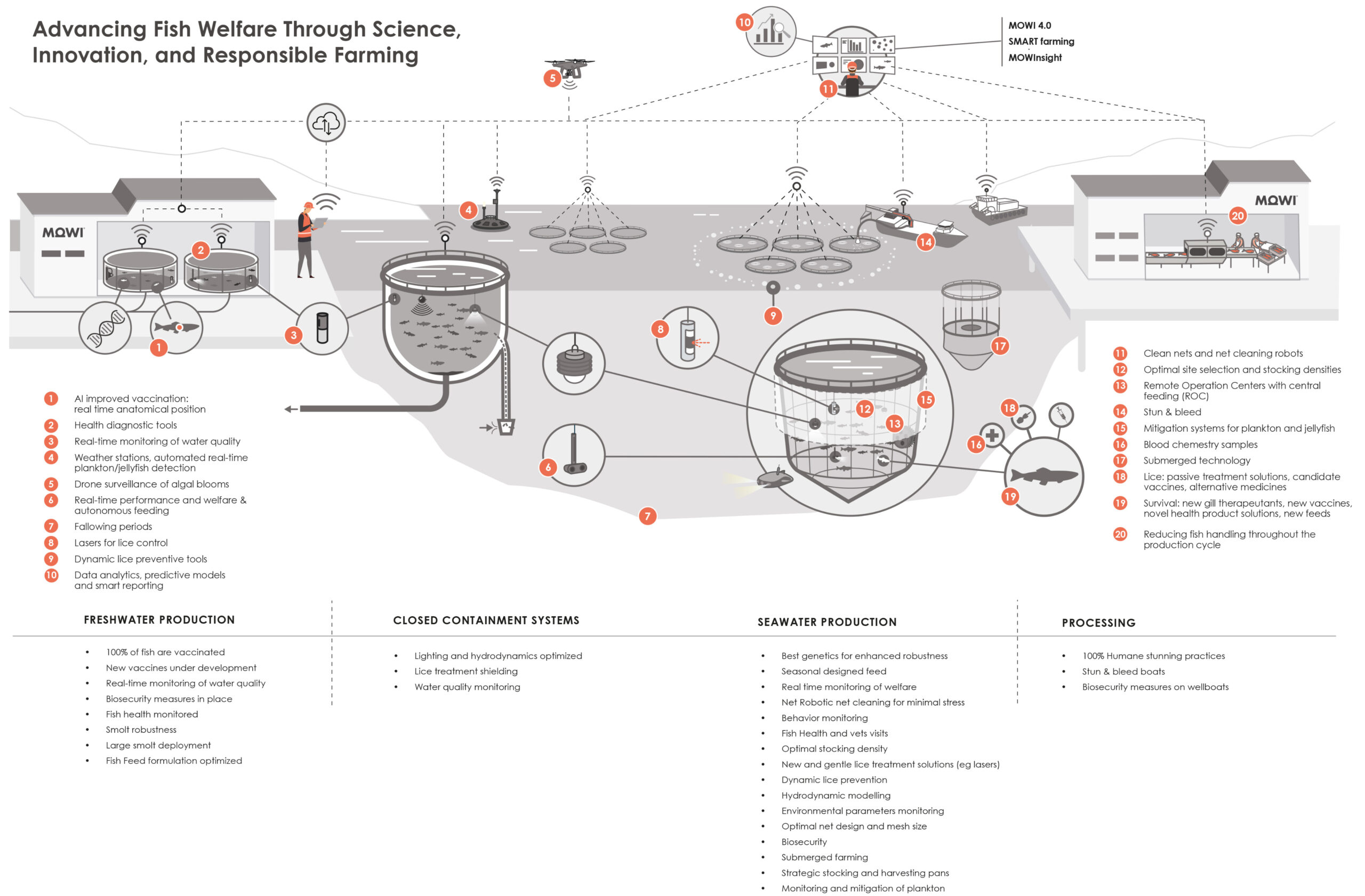
Mowi has reduced high-pressure cleaning of salmon nets and dependency on copper-based antifouling paints since 2020. In Mowi Norway we continue the testing and adoption of robotic net cleaning technology. We continue to refine our net- and antifouling strategies, as well as testing and introducing new high-performing and durable net concepts. Additionally, we are working on several projects to improve predation control by optimizing net design.
Our focus on defining best practices for farming in exposed locations continued in 2024, focusing on selecting the best pen equipment for high-energy sites. In Norway, we initiated activities at the Blue Revolution Center (BRC) in collaboration with Mowi, Sintef, and NMBU to optimize technology, operations, and biology for high-exposure sites.
Together with suppliers, we continually develop and refine risk-based tools to select the best pen equipment for all farm conditions. This optimization includes pen choice, net material, and geometry for both sheltered and exposed locations. We ensure all farms are equipped with best-in-class production equipment tailored to their environment, reducing escape risks and safeguarding salmon welfare.
Sea lice mitigation and management
We continue to improve our sea lice treatment systems to be gentler on salmon, advanced automatic sea lice counting and prevention technologies. We initiated projects to enhance lice control in harsh weather conditions, such as using submerged pens in region Mid in Norway. We also continued to refine best practises for non-medicinal combination treatments and the development and testing of passive treatment concepts. Additionally, we implemented solutions to improve the performance and survival of farmed cleanerfish and validated best practices for their lice control. Our Breeding and Genetics division continued to focus on genomic selection for lice resistance in the Mowi strain.
Fish health and welfare
We are working with suppliers to develop and improve vaccines, aiming for better survival rates moving forward. Extensive data analysis on pancreas disease, gill health, wounds, and cardiomyopathies has provided insights to optimize our biosecurity programs, veterinary health plans, and best practices. Key projects on gill health have increased our knowledge and improved management approaches. We continued investigating SRS management practices and researching alternative health products and vaccines, and initiated activities to monitor and prevent against harmful species of plankton and jellyfish.
To achieve further improvements in fish health and welfare management, extensive data analysis projects on pancreas disease, gill health, wounds and cardiomyopathies were initiated. These are expected to yield important insights and findings that will be used to further optimise our biosecurity programmes, veterinary health plans and best practices. With respect to gill health in particular, several key projects and activities contributed to increasing our knowledge of associated conditions and improving our management approaches. On SRS, we continued detailed investigations into our management practices and research into alternative health products and vaccines.
Learn more about our SMART Farming concept here