The Mowi Salmon Lifecycle


We nurture and care for every fish throughout its lifecycle, from the moment it begins life as a tiny egg through to harvest. Our approach is focused on providing our salmon with the right conditions to grow, with careful attention to their health, welfare, nutrition, and the quality of the water they live in at every stage.
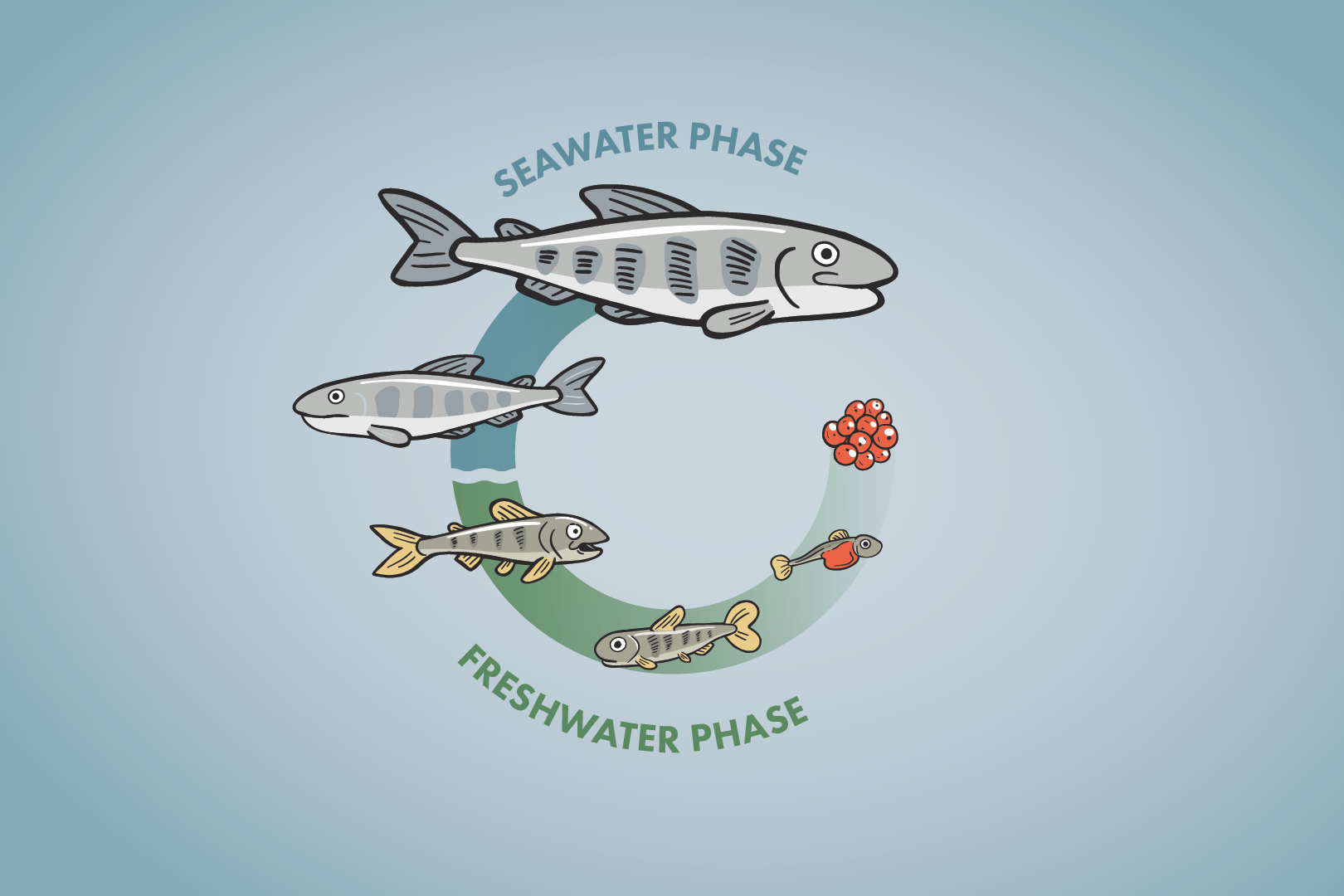
The lifecycle of our salmon begins in freshwater, where they pass through several important stages before they are ready to enter the sea.
From egg to alevin
Our salmon begin life as a small, pea-sized egg. The fertilised eggs are carefully kept in incubation trays or tanks, where our teams can closely monitor water temperature, quality and oxygen levels. After around a month, the eggs hatch into tiny fish called alevin.
At this stage, the alevin have an attached yolk sac, which provides all the nutrition they need during their earliest weeks of life. They remain in freshwater while they develop and gradually absorb their yolk sac, becoming stronger and more independent.
From fry to parr
Once the yolk sac has been absorbed, the young salmon enter the fry stage. This is when they begin to feed for themselves. The fry are moved into freshwater tanks, where they continue to grow and develop.
As they become larger, they progress into the parr stage. During this period, our teams carefully monitor the fish and the conditions around them, including water quality, temperature and oxygen levels. The salmon are also vaccinated to help protect their health and are graded as they grow.
Preparing for life at sea
As the salmon mature, they undergo an important natural process called smoltification. This involves a series of physiological, physical and behavioural changes that prepare them to move from freshwater into seawater.
Our freshwater phase typically lasts around 10-16 months, although the exact timing depends on the farming system and the size at which the fish are transferred to sea.
In some cases, we can extend the freshwater phase and grow the salmon to a larger post-smolt size before they move to the sea. This approach allows the fish to grow larger and more robust before entering the marine environment and can reduce the time they spend in sea pens.
Growing in freshwater and brackish water
A selection of small salmon may also be transferred from freshwater tanks to net pens at our freshwater sites. Here, they can continue growing before making the transition out to sea.
This additional stage provides another opportunity to closely monitor the fish and support their health and welfare as they develop. Mowi continues to explore post-smolt farming to grow larger, more resilient salmon before sea transfer.
Life at sea
Once the salmon have completed smoltification and are physically ready, they are carefully transferred to our sea-based farms. Here, they live in large net pens in coastal waters, with plenty of space to swim and move naturally.
During this stage, our teams continue to closely monitor the health and welfare of the fish, as well as environmental conditions, including water quality and temperature. Feeding is carefully managed to provide the nutrients the salmon need to grow, while technologies such as camera-based feeding systems can help monitor feeding behaviour and appetite.
The length of time salmon spend at sea varies according to factors including their size at transfer, seawater temperature, and biological conditions. Typically, the seawater phase lasts around 12–24 months until they are big enough to be harvested for market.
From a tiny egg in a freshwater hatchery to a fully grown salmon in the sea, every stage of the journey plays an important role in producing healthy, high-quality seafood while putting fish health and welfare at the heart of how we farm.